

POTS & Dysautonomia
Bring numbers they can't dismiss — your orthostatic reality, captured as it happens.
- iPhone
- Android
- Apple Watch
- Android Watch
POTS means a racing heart on standing, crushing fatigue, and too often being told it's 'just anxiety.' Log supine and standing heart rate for orthostatic comparison, symptoms with severity, fluids, and the built-in COMPASS-31 questionnaire — hard numbers for cardiology and neurology visits.
Highlights
- Supine vs standing heart rate captured in seconds — the orthostatic comparison your clinic asks about
- The COMPASS-31 autonomic symptom questionnaire, built in and ready when your clinic asks
- Symptoms with severity, fluids with one-tap amounts, triggers, and time-of-day patterns derived automatically
- Insights trend heart-rate deltas and severity — PDF/CSV reports; private, on your device, no account
Screens
-
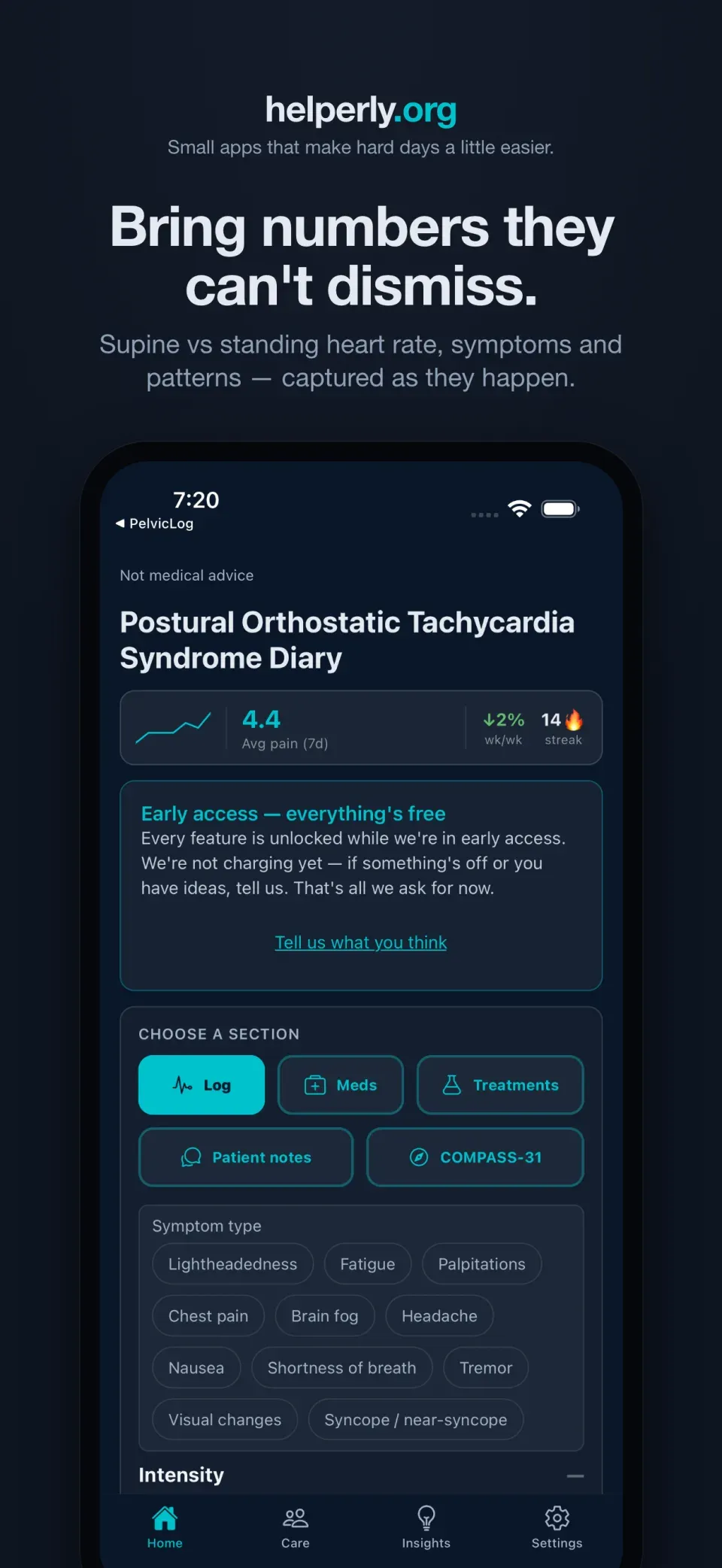
Bring numbers they can't dismiss — captured as they happen.
-
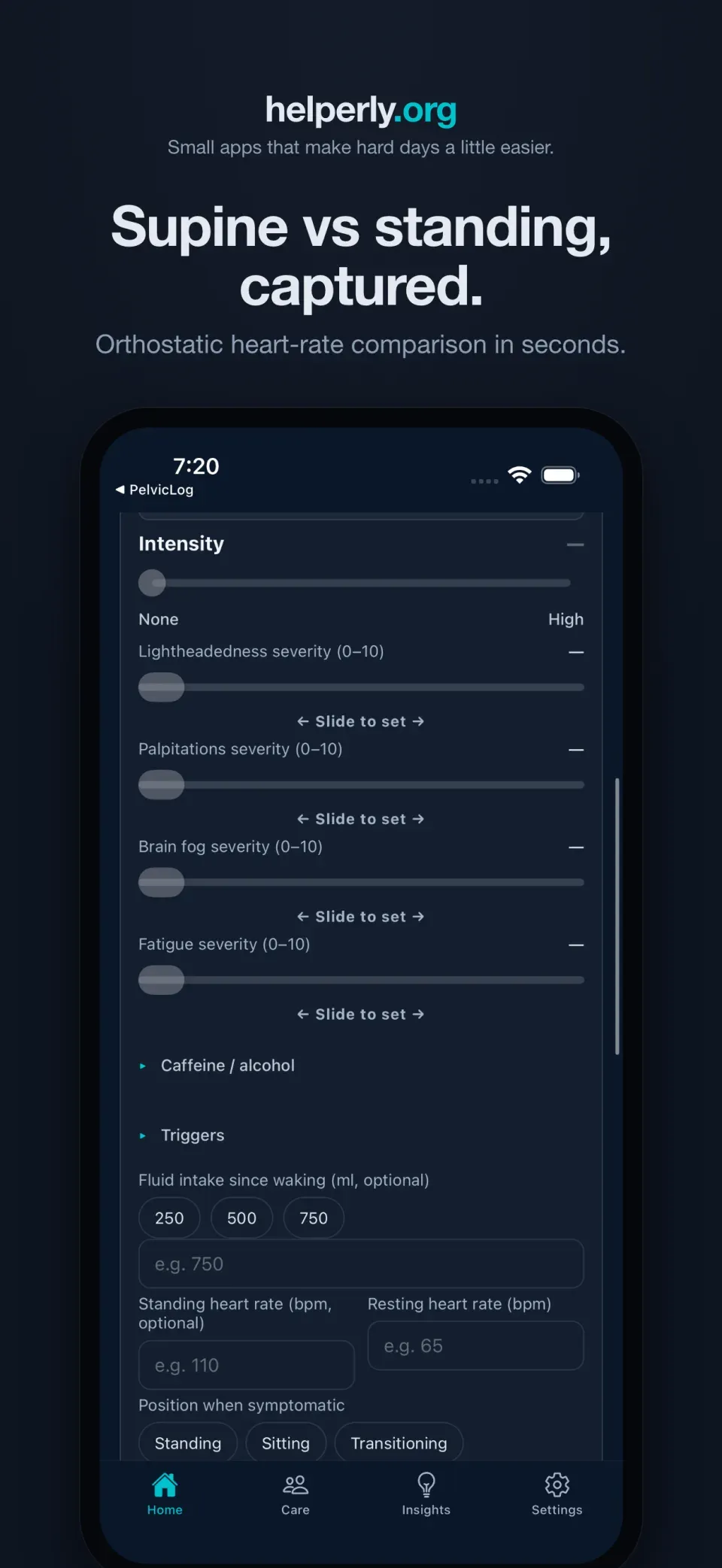
Supine vs standing, captured — orthostatic heart-rate comparison in seconds.
-
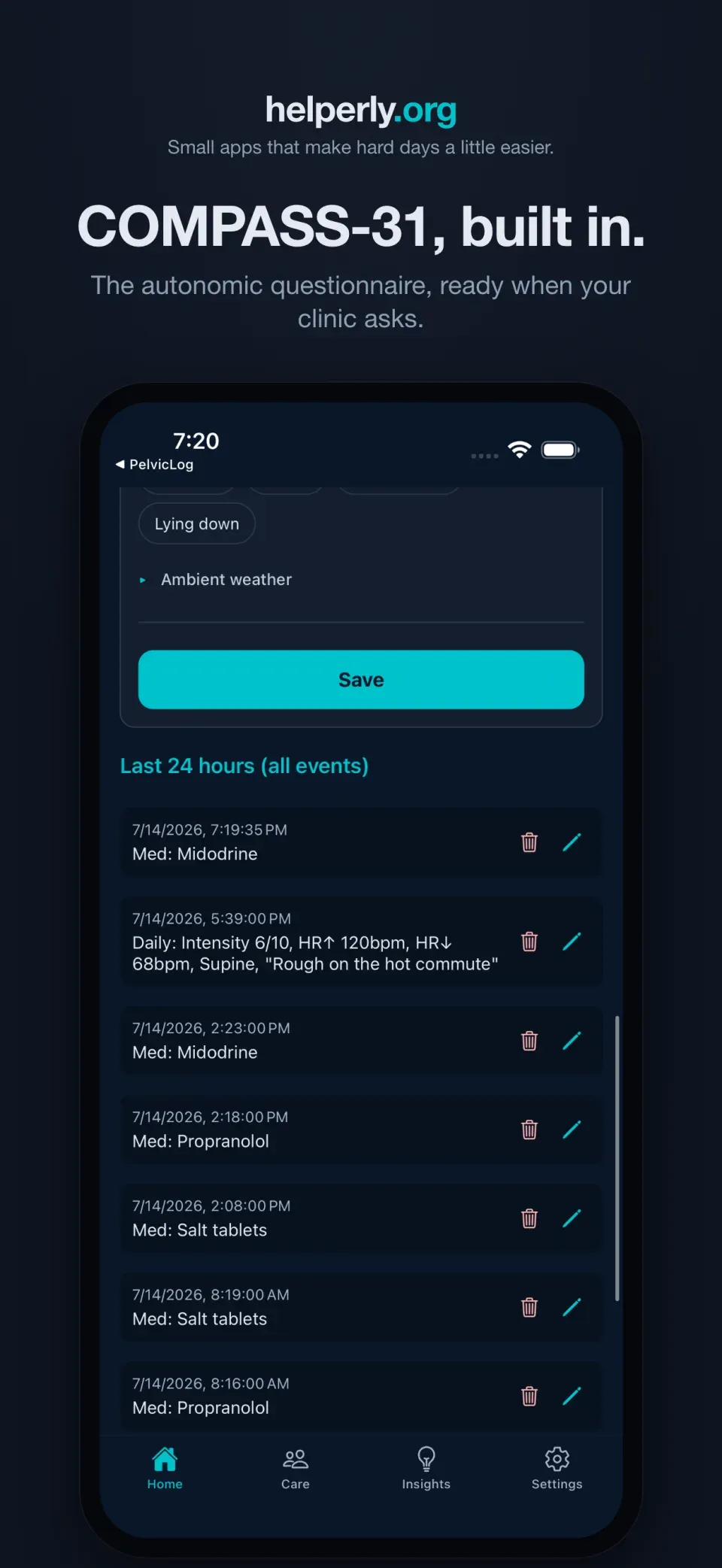
COMPASS-31, built in — ready when your clinic asks.
-
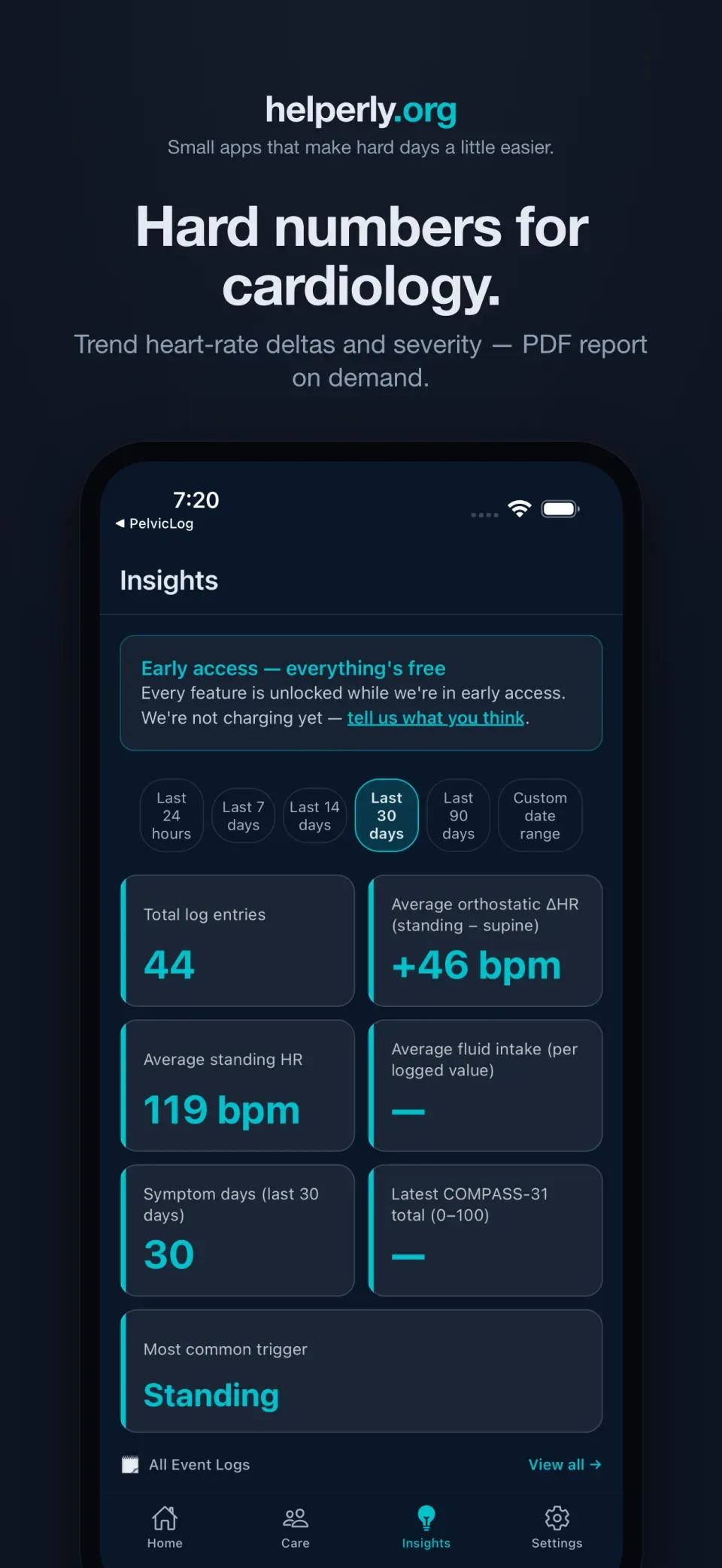
Hard numbers for cardiology — trends plus a PDF report, on demand.
Postural orthostatic tachycardia syndrome and the wider dysautonomia family — orthostatic intolerance, including the post-viral and long-COVID onset many patients report — come with a particular burden: living with unpredictable flares while being told it’s just anxiety. Hard numbers are how patients get believed, and this app is built to capture them.
Log supine and standing heart rate for the orthostatic comparison your cardiologist or neurologist asks about. Track symptom episodes with severity, fluid intake with one-tap amounts, caffeine and alcohol when relevant, triggers like heat, standing, meals, and exertion, and optional local temperature and humidity. The COMPASS-31 autonomic questionnaire is built in, and time-of-day patterns derive automatically from when your symptoms actually happen. When it’s time for an appointment, PDF and CSV reports put months of evidence on the table. An Apple Watch or Wear OS companion app is included for quick one-tap entries from your wrist.
This app is a personal tracking journal — not a medical device, and not a substitute for medical advice, diagnosis, or treatment.
Features
-
Supine vs standing, captured
Record supine and standing heart rate for orthostatic comparison in seconds, alongside symptom episodes — dizziness, palpitations, brain fog, fatigue and more — with severity.
-
COMPASS-31, built in
The validated autonomic symptom questionnaire is part of the app, so the score is ready when your cardiologist or neurologist asks for it.
-
Hard numbers for cardiology
Insights trend heart-rate deltas, symptom severity, and daily patterns over time. PDF and CSV reports bring evidence to appointments — including for the EDS and MCAS overlaps common in this community.
Your privacy
Your health data stays on your device by default — local-first, with no account required to begin. helperly.org never sells your data. The app helps you log and understand patterns; it does not provide a diagnosis or medical advice. The free version is ad-supported through Google AdMob, which applies its own ad tracking; upgrade to remove ads.
What's new
-
Preparing for App Store and Google Play release. Join the waitlist to hear the moment it's live.
Available in 14 languages
- English
- Español
- Français
- Deutsch
- Italiano
- Português
- Català
- Русский
- العربية
- हिन्दी
- 简体中文
- 繁體中文
- 日本語
- 한국어
Questions about POTS & Dysautonomia?
Available now. Reach our team through the protected support form — we read every message.
Contact support