

Hypermobility Spectrum HSD
Your history, finally in one place — subluxations, pain, fatigue, and sleep: the whole hypermobile picture.
- iPhone
- Android
- Apple Watch
- Android Watch
For HSD and hEDS — the spectrum older clinic letters call JHS — the exhausting part is re-explaining it all to every specialist. Tap-to-add subluxations and dislocations as they happen, track pain, fatigue, and sleep together, and bring rheumatology, physio, and genetics one credible record.
Highlights
- Tap-to-add subluxation and dislocation events as they happen — joint zones from TMJ and ribs to fingers and ankles
- Pain, fatigue, and sleep-disturbance sliders — the whole picture, not just joints
- Triggers like activity, prolonged standing, weather, stress, poor sleep, and hormonal changes
- Evidence for every specialist — trends by joint and over time, with PDF/CSV for rheumatology, physio, and genetics
Screens
-
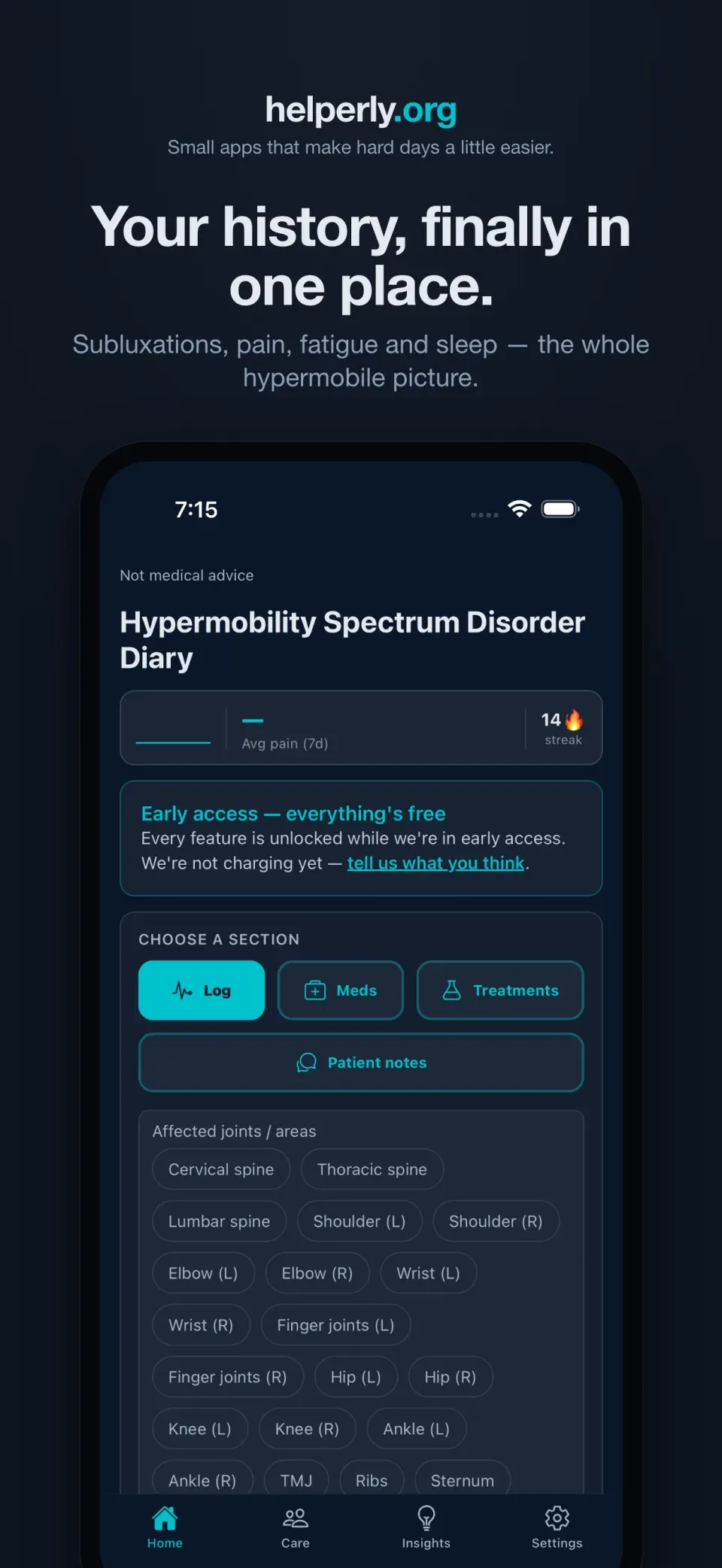
Your history, finally in one place — the whole hypermobile picture.
-
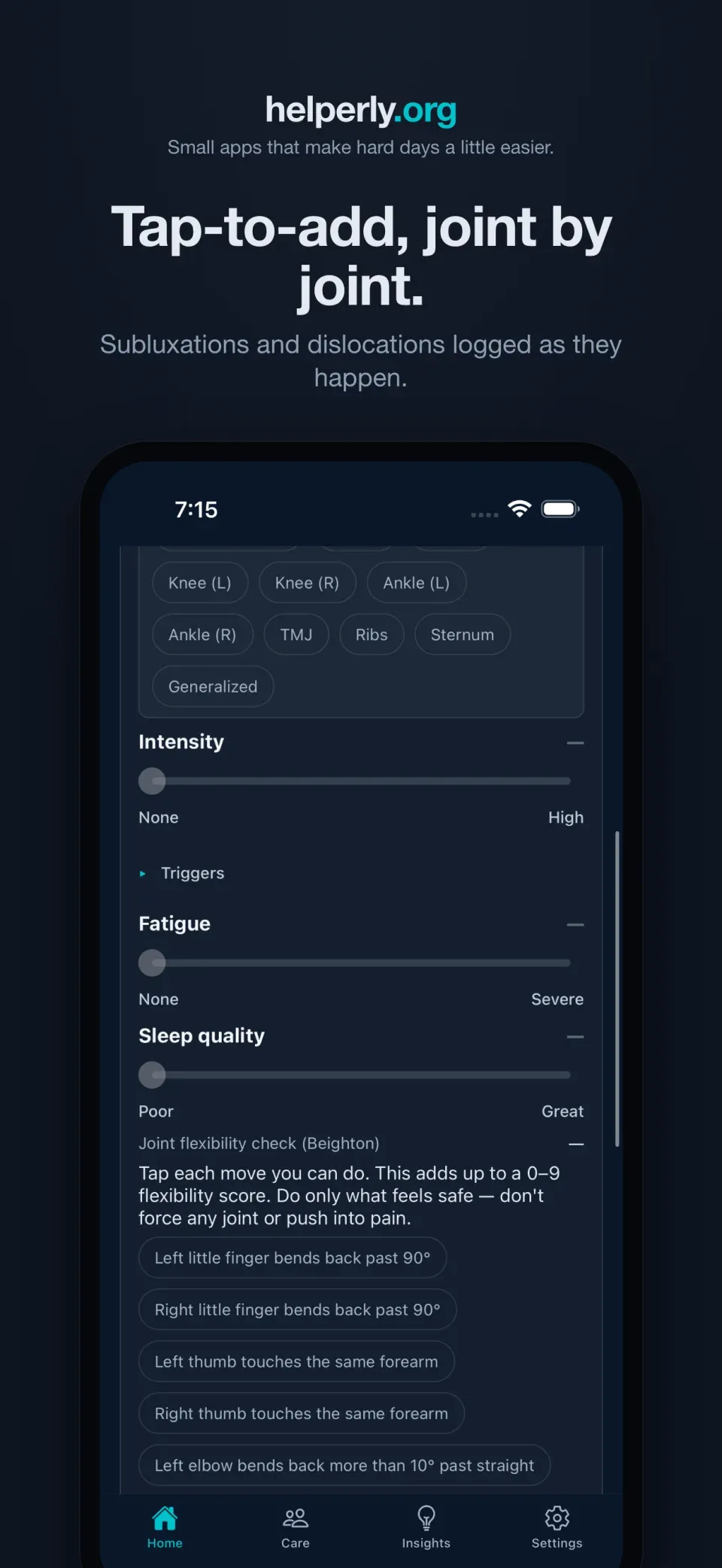
Tap-to-add, joint by joint — subluxations and dislocations logged as they happen.
-
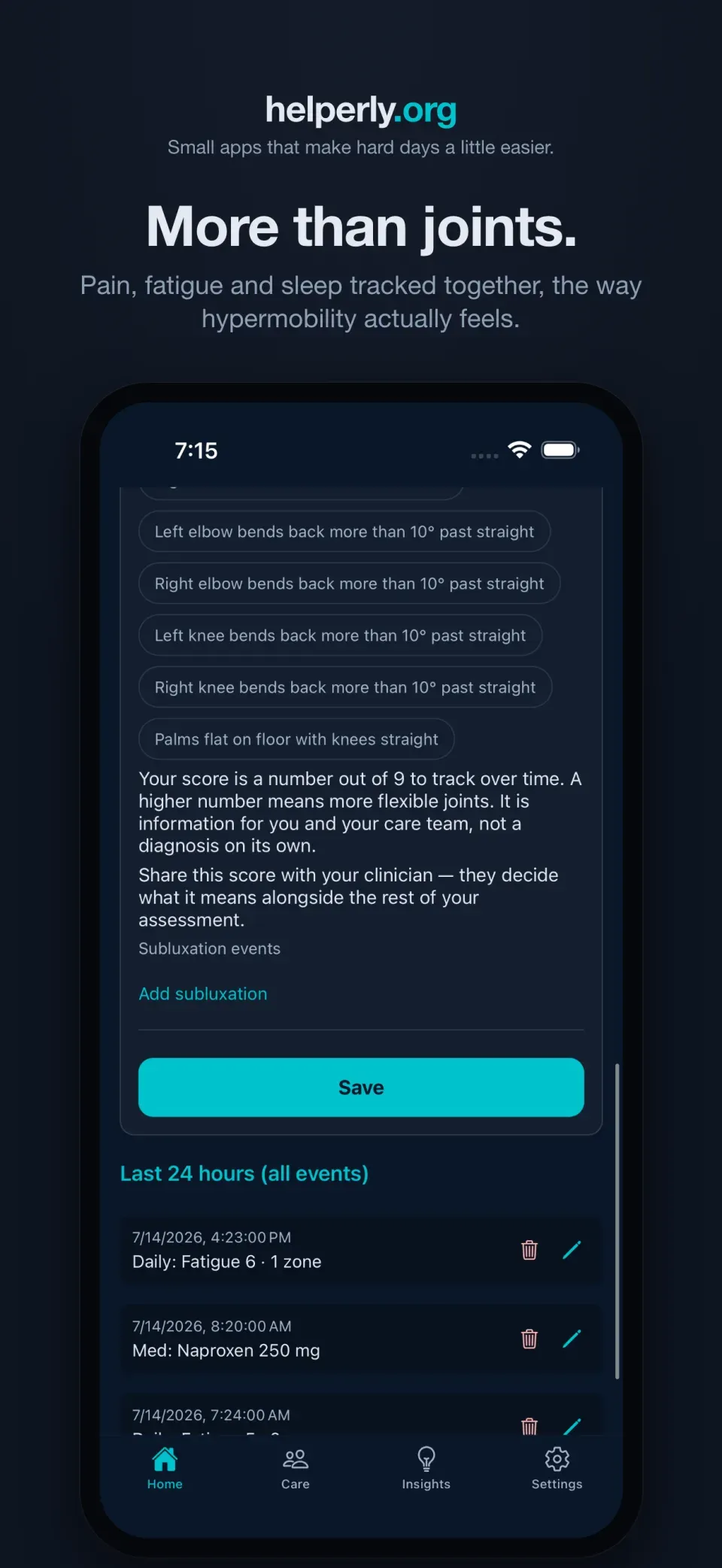
More than joints — pain, fatigue, and sleep, the way hypermobility actually feels.
-
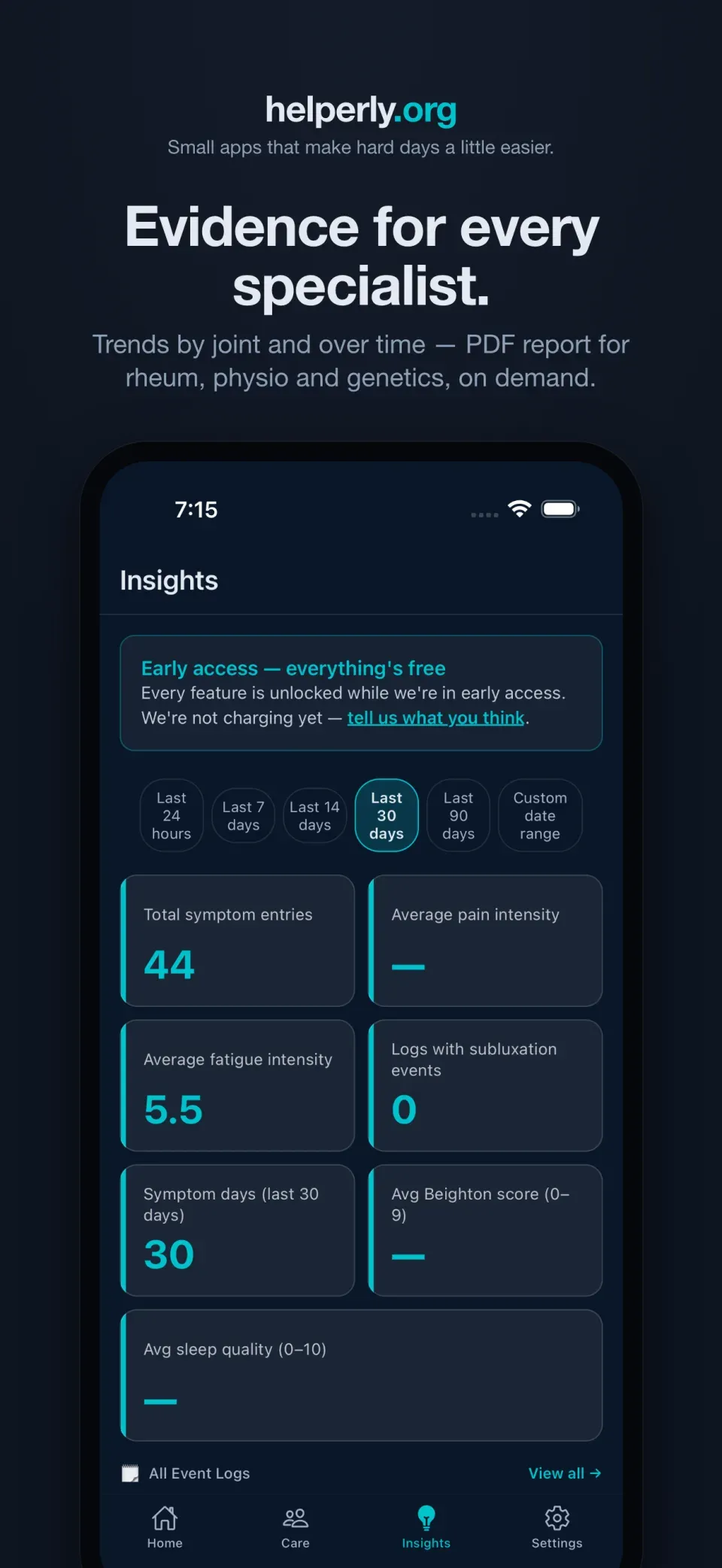
Evidence for every specialist — trends plus a PDF report for rheum, physio, and genetics.
Hypermobility Spectrum Disorder and hypermobile Ehlers-Danlos Syndrome — the spectrum older clinic letters may call Joint Hypermobility Syndrome or generalised joint hypermobility — usually mean a years-long diagnostic odyssey, too much dismissal along the way, and a multi-system condition that’s exhausting to re-explain to every new specialist. Built for zebras who need their history in one place.
The app is designed around hypermobile reality: joint zones across the body with tap-to-add subluxation and dislocation events as they happen; pain, fatigue, and sleep-disturbance sliders; triggers like activity, prolonged standing, weather, stress, poor sleep, and hormonal changes; and medications, treatment courses, photos, and notes. Insights turn it into pain and fatigue trends, event frequency by joint, and trigger patterns — a credible, complete record for rheumatology, physio, and genetics, with useful context for the POTS and MCAS overlaps many in this community manage. An Apple Watch or Wear OS companion app is included for quick one-tap entries from your wrist.
This app is a personal tracking journal — not a medical device, and not a substitute for medical advice, diagnosis, or treatment.
Features
-
Tap-to-add, joint by joint
Joint zones across the body — spine, shoulders, elbows, wrists, fingers, hips, knees, ankles, TMJ, ribs — with subluxation and dislocation events logged as they happen, not reconstructed later.
-
More than joints
Pain, fatigue, and sleep disturbance tracked together, the way hypermobility actually feels — plus medications, treatment courses, photos, and notes.
-
Evidence for every specialist
Insights show pain and fatigue trends, event frequency by joint, and trigger patterns — a clear record for rheumatology, physio, and genetics appointments, and helpful context for the POTS and MCAS overlaps many in this community manage. PDF and CSV export included.
Your privacy
Your health data stays on your device by default — local-first, no account required to begin. helperly.org never sells your data. The app helps you log and understand patterns; it does not provide a diagnosis or medical advice. The free version is ad-supported through Google AdMob, which applies its own ad tracking; upgrade to remove ads.
What's new
-
Preparing for App Store and Google Play release. Join the waitlist to hear the moment it's live.
Available in 14 languages
- English
- Español
- Français
- Deutsch
- Italiano
- Português
- Català
- Русский
- العربية
- हिन्दी
- 简体中文
- 繁體中文
- 日本語
- 한국어
Questions about Hypermobility Spectrum HSD?
Coming soon. Reach our team through the protected support form — we read every message.
Contact support